
Pest Control in San Antonio, TX
Identify what it actually is, treat where it's coming from, and tell you the truth about what it takes.
Most pest problems in San Antonio come down to the same thing: something outside found a way in, and something inside made it worth staying. Our clay soil shifts with every wet and dry cycle and opens gaps at the foundation. Weep holes sit open by design. Summer heat drives insects indoors looking for water. What works is treatment aimed at where they are actually coming from — which means finding that out first.
Local, Licensed, and Steve Stays Involved
Stinky Steve Pest Control is locally owned and operated in San Antonio. Steve Estrada is a licensed pest technician, and he stays hands-on with the work — inspections, assessments, and the calls that need judgment rather than a checklist.
That matters more than it sounds. A lot of pest control here runs through national brands where the person on the phone, the person who quotes the job, and the person who shows up are three different people at three different companies, and none of them owns the outcome. Here the owner is still in the field, and nothing gets farmed out to a subcontractor.
It also means you get told when something does not need treating. That happens more than people expect.
What Steve Treats
Some of these have their own pages with a full breakdown. Others are covered here.
Ants
Ant treatment goes wrong more often than any other general pest job, and it is almost always because the species was never identified. Fire ants need broadcast treatment across the yard rather than mound by mound. Sugar ants respond to bait and get worse with spray. Carpenter ants usually point to a moisture problem underneath. Some species split into multiple colonies when sprayed, which turns one problem into several.
Full breakdown by species: ant control
Roaches
The two roaches in San Antonio homes are completely different problems. German roaches live indoors, breed indoors, and never leave — that is the one that becomes an infestation. Tree roaches and water bugs come in from outside and are usually handled with exterior perimeter work.
Full breakdown: roach control
Spiders
Most spiders here are harmless and are reducing the insect population around your house. Black widows and brown recluses are the two worth handling differently. The practical point is that spiders are a symptom — they are present because something they eat is present.
Full breakdown: spider control
Scorpions
Striped bark scorpions are common here, especially on the north and west sides. They climb, they get through gaps about the width of a credit card, and they come from the surrounding landscape rather than nesting in the structure. They are harder to control than most pests, and treatment that only covers the foundation line tends to disappoint.
Full breakdown: scorpion control
Wasps, hornets, and bees
Paper wasp nests under eaves and in doorways, yellowjackets in the ground or in wall voids, hornets, and carpenter bees boring into fascia and deck rails are all handled directly. Honey bees are a different situation — a colony gets evaluated carefully rather than disturbed, and extracting a live colony from inside a structure belongs with a beekeeper who does removals.
Full breakdown: bee, wasp and hornet removal
Mosquitoes
Treatment of the areas where mosquitoes rest during the day, combined with trapping and with finding the standing water producing them. Spraying alone is a treadmill if something on the property is breeding them.
Full breakdown: mosquito control
Fleas and ticks
Usually a pet-related problem, but not always — wildlife in an attic or under a deck leaves fleas and ticks behind when it goes, and they start looking for a new host. That is often why people notice bites shortly after animal noise stops. Treatment covers the interior harborage areas and the exterior spaces where pets spend time, and it works best alongside veterinary treatment for the animals themselves.
Silverfish and firebrats
Moisture-driven. They turn up in bathrooms, laundry areas, and around water heaters, and they feed on paper, starch, and stored goods. Reducing humidity and fixing leaks does as much as treatment.
Earwigs, crickets, and occasional invaders
These come indoors in numbers after weather changes — heavy rain, a sudden dry stretch, or a temperature swing. They generally are not establishing indoors, they are moving through. Exterior perimeter work and closing entry points handles most of it.
Pantry pests
Weevils, flour beetles, and meal moths, almost always brought home in a package rather than coming in through a door. Treatment matters less than finding the infested source and getting it out of the pantry.
Not General Pest Work
Some things are their own job and are handled separately:
- Termites — a structural issue with its own inspection and treatment approach, including inspections for home sales
- Bed bugs — a specific process requiring follow-up visits
- Rodents — removal plus sealing rather than treatment
- Wildlife — raccoons, squirrels, skunks, opossums, and bats
- Entry point sealing — closing the openings that let things in
- Dead animal removal — locating and removing what died in a wall or attic
Why San Antonio Homes Get Pests
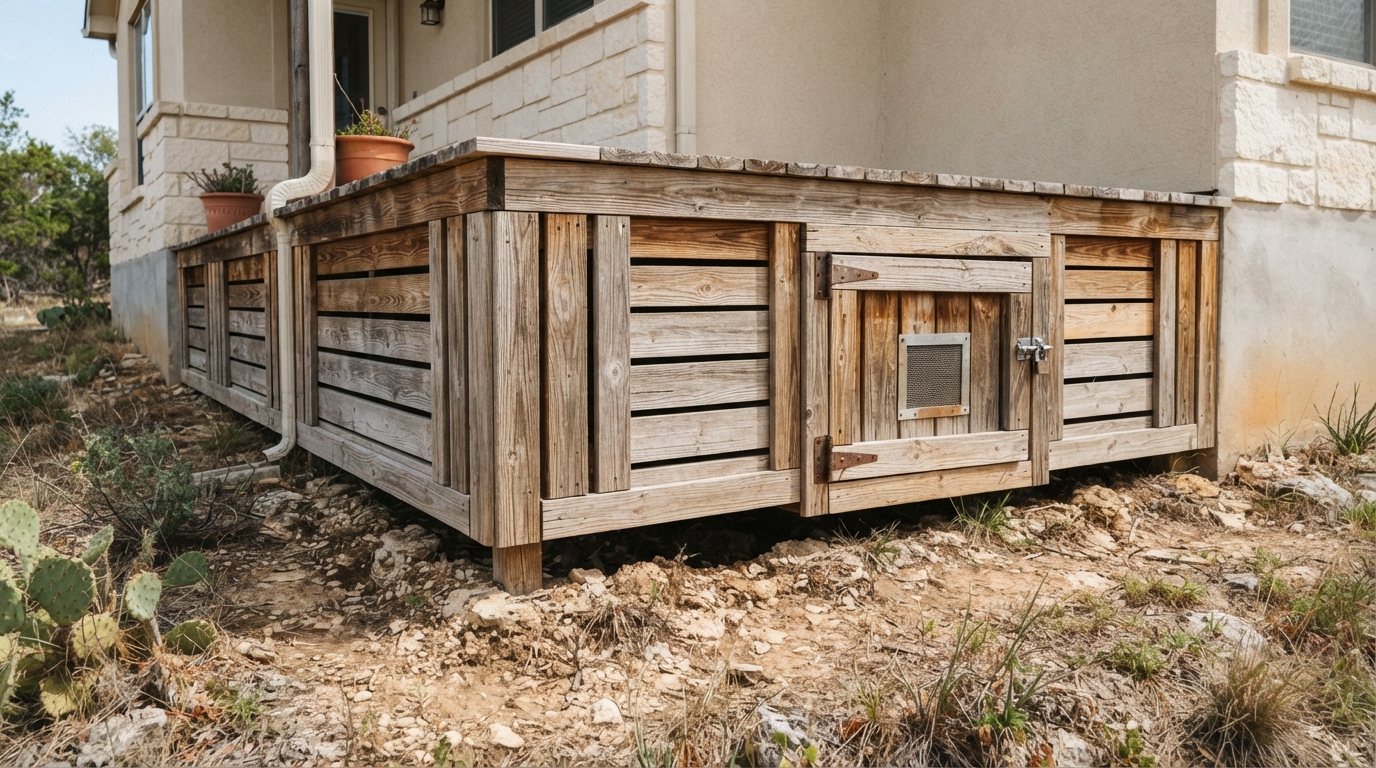
Shifting clay soil, unsealed weep holes, and foundation expansion joints create primary entry routes for San Antonio pests.
- Clay soil. It expands when wet and contracts when dry, cracking foundations and opening gaps around plumbing penetrations. This is the single biggest structural factor here.
- Weep holes. Standard on brick veneer and open by design, which makes them an open door.
- Heat and drought. Insects move indoors looking for water, which is why activity spikes in the hottest stretch.
- Heavy rain after dry spells. Flushes insects out of the soil and drainage and into structures.
- Mulch against the foundation. Ideal harborage right where you least want it.
- Mild winters. Populations are not knocked back the way they are further north, so pressure stays year round.
Why Store-Bought Products Often Make It Worse
- Most consumer sprays are repellents. Insects learn to avoid treated surfaces and route around them, which scatters a population instead of reducing it.
- Spraying a trail kills what you can see and leaves the colony producing more. Bait works because it gets carried back.
- Foggers and bombs do not reach voids where insects actually live, and they push activity into rooms that were not affected before.
- Perimeter products applied without knowing the entry points mostly treat the wrong parts of the house.
- Using the wrong product on the wrong species can multiply the problem rather than reduce it. Several ant species split their colonies in response to being sprayed.
How Steve Works
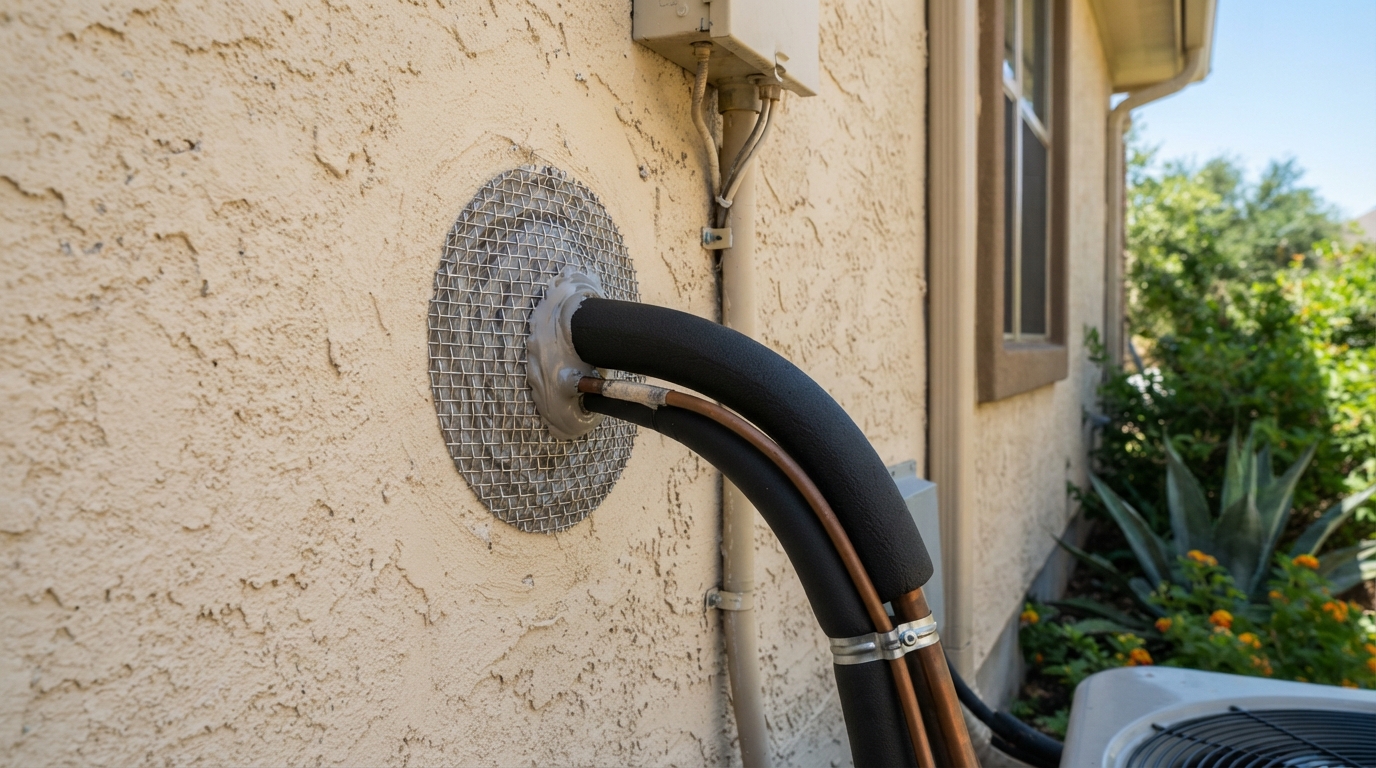
A sealed utility line penetration on a home exterior wall preventing pest ingress.
- Identification. Determining what you actually have before anything is treated, because for several pests the species decides the entire approach.
- Finding the source. Where they are getting in and what is keeping them around — moisture, food, harborage.
- Interior treatment targeted at cracks, voids, and harborage areas rather than sprayed across open surfaces.
- Exterior perimeter work, including the foundation, weep holes, eaves, and entry points.
- Baiting where baiting is the right tool, particularly where the colony has to be reached rather than the individuals.
- Conditions guidance — what on the property is contributing and what would help to change.
- Follow-up where the situation calls for it. Some jobs are one visit. Some need another to confirm the population is actually down.
One-Time Service or Ongoing
Some problems are solved in a visit. Others come back because the pressure outside never really stops.
A one-time treatment makes sense for a specific problem with a clear cause — a wasp nest, a single ant trail, an isolated issue.
Ongoing service makes more sense where the pressure is constant, which in San Antonio is common. Scorpions, fire ants, and seasonal roach pressure tend to return regardless of how good the last treatment was, because the source is the surrounding environment rather than anything inside the house.
How often depends on the property and what you are dealing with. Steve will tell you honestly whether you need ongoing service or whether one visit is likely enough.
Where Steve Works
San Antonio and the surrounding area, including Schertz, Converse, Boerne, Bulverde, Stone Oak, and Spring Branch.
What Pest Control Costs in San Antonio
Pricing depends on what you have, the size of the property, whether the work is interior, exterior, or both, how much of the structure is involved, and whether it is a one-time visit or ongoing service. A single wasp nest and a whole-property fire ant program are different work.
Steve gives you a number after seeing what you are dealing with.
Pest Control FAQ
Not Sure What You're Dealing With?
If you are seeing something you cannot identify, or you have treated a problem and it keeps coming back, the first step is finding out what it actually is and where it is coming from. Steve will tell you that straight, including when it does not need much.