
Bee, Wasp & Hornet Removal in San Antonio, TX
Nests by the door, in the eaves, in the ground, or in a wall — handled.
A nest somewhere inconvenient is one of the few pest problems that genuinely cannot wait. If it is above a doorway, near where kids play, or on a patio you use every evening, the calculation is simple. What matters is identifying what you actually have, because wasps, hornets, yellowjackets, carpenter bees, and honey bees are five different situations and one of them is handled very differently from the rest.
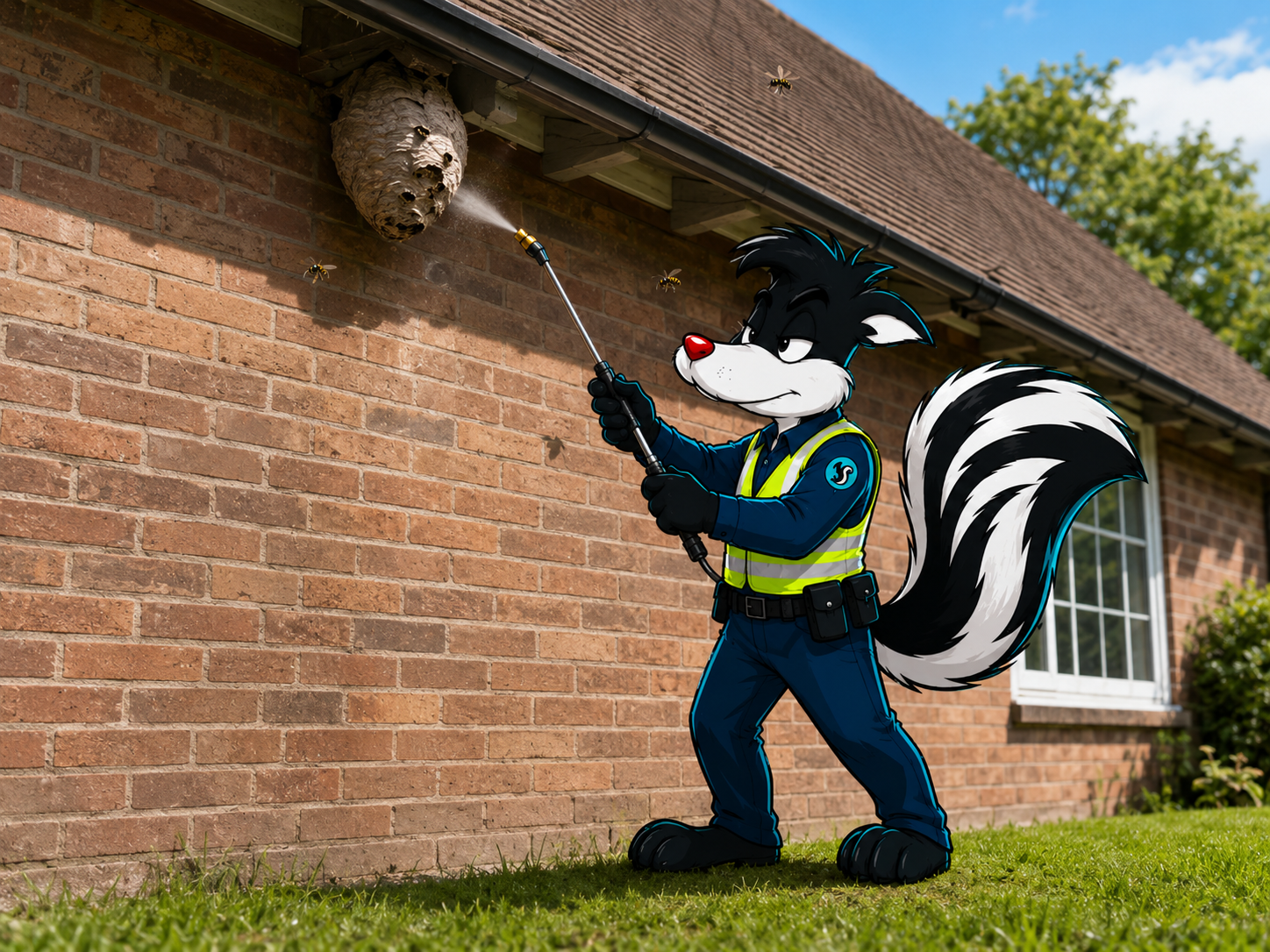
What Steve Handles
Paper wasps
The most common call. Open, umbrella-shaped nests with visible cells hanging under eaves, in door frames, under patio furniture, inside grills, and in porch light fixtures. They are not looking for trouble, but a nest at head height by a doorway means someone walks into their space several times a day.
Yellowjackets
More aggressive than paper wasps and harder to deal with, partly because the nest is often hidden. They nest in the ground, inside wall voids, in attic spaces, and under decks — so the first sign is usually a steady stream of insects coming and going from a single point rather than a visible nest. A ground nest hit by a lawnmower is one of the more common ways people get stung badly.
Hornets
Larger enclosed nests, usually elevated — in trees, on eaves, under overhangs. Fewer calls than wasps and yellowjackets here, but they get handled the same way.
Mud daubers
Tube-shaped mud nests on walls, under overhangs, and in sheds and garages. Not aggressive, and they hunt spiders, so they are doing you a favor. Often the right answer with mud daubers is to leave them alone unless placement is a genuine problem.
Carpenter bees
Large bees that look like bumblebees but with a shiny black abdomen rather than a fuzzy one. They bore perfectly round holes, about the diameter of a finger, into fascia, deck rails, pergolas, fence tops, and any exposed unpainted wood.
The bees themselves are not much of a threat — males hover aggressively and cannot sting at all. The damage is the issue. They tunnel along the grain, they return to the same wood year after year and extend the galleries, and woodpeckers open the tunnels up going after the larvae, which turns a round hole into a torn-open section of trim.
Untreated wood is the target. This is one place where exterior maintenance and pest control overlap directly.
Bumblebees
Fuzzy, round, and generally docile. They nest in the ground, in wall voids, and sometimes in attic insulation, in small colonies that die off seasonally. They are valuable pollinators and often best left alone — but a nest in a wall or beside a walkway is a different matter, and Steve handles those.
Honey Bees Are Handled Differently
If it is honey bees rather than wasps, this is not the same situation and should not be treated the same way.
Honey bees are important pollinators, and Africanized bees are established in the San Antonio area, which means a colony gets evaluated carefully rather than disturbed. A colony inside a wall, soffit, or chimney also brings comb and stored honey with it. If that is left behind after the bees are gone, it attracts other pests and can cause staining and damage.
Steve will assess a bee situation and tell you what you actually have. Extracting a live honey bee colony from inside a structure is specialist work and belongs with a beekeeper who does removals.
The mix-up runs the other way constantly, though — a great many "bee" calls turn out to be wasps or yellowjackets, and those Steve handles directly.
Aggressive Colonies
Some nests can be handled straightforwardly. Others cannot.
Yellowjacket nests in wall voids, established colonies in tight spaces, and anything defending a large nest are situations where the approach and the equipment matter. Steve suits up for those. That sounds obvious, but it is the difference between assessing a nest properly and looking at it from across the yard and deciding it is somebody else's problem.
Where Nests Turn Up
- Under eaves and soffits
- Inside door frames and around porch light fixtures
- Under patio furniture, grills, and umbrellas
- Inside playground equipment and swing sets
- In the ground, especially in bare or sparse areas of a yard
- Inside wall voids, entering through a gap or a weep hole
- In attic spaces, entering at a vent or roofline gap
- Under decks and in deck framing
- In sheds, garages, and unused equipment
- Inside irrigation boxes and meter boxes
What Not to Do
- Do not knock a nest down with a broom, a hose, or a rake. This is the most reliable way to get stung several times.
- Do not spray a ground nest and walk away. Yellowjackets come out fast and in numbers, and the person doing the spraying is standing right there.
- Do not seal a wall void with insects still inside. They will find another way out, and that way is frequently into the house.
- Do not treat at midday. Most of the colony is out foraging, so treating in the middle of the day misses a large part of it.
- Do not use a ladder to reach a nest yourself. Being stung on a ladder is how a wasp problem becomes an emergency room visit.
- Do not plug carpenter bee holes right away. Sealing an active gallery traps larvae inside, and they tunnel out through the surrounding wood, which makes the damage worse.
If Someone Has a Sting Allergy
Say so when you call. It changes the urgency and it changes how the work is scheduled.
If anyone is having a serious reaction to a sting, get emergency medical care immediately. That is not a question for a pest control page.
How Steve Handles Stinging Insects
- Identification. Determining what you actually have, since the response differs — and since a real share of bee calls turn out to be wasps.
- Locating the nest. Straightforward when it is visible, less so with yellowjackets in a wall or in the ground, where the entry point has to be traced.
- Assessing the approach. Placement, colony size, and how defensive the insects are determine how it gets handled and what protection is needed.
- Treatment, timed for when the colony is present rather than out foraging.
- Nest removal where the location allows it, so old nest material does not remain.
- Carpenter bee work — treating the galleries first, then sealing them once inactive, and identifying the untreated wood that is drawing them.
- Identifying what is attracting them and what conditions make a return likely.
Keeping Them From Coming Back
- Knock down old paper wasp nests in winter when they are inactive, since sites get reused
- Paint, stain, or seal exposed wood on fascia, deck rails, pergolas, and fence tops — carpenter bees strongly prefer bare wood
- Screen weep holes, attic vents, and gaps where wall voids can be reached
- Keep trash and recycling containers closed, since yellowjackets scavenge heavily in late season
- Clean up fallen fruit
- Cover food and drinks outdoors in late summer and fall, when yellowjackets shift toward scavenging
- Check playground equipment, grills, and patio furniture in spring before the season gets going
- Fill ground holes and repair bare patches in the lawn
Late Summer Is Different
Wasp and yellowjacket colonies build through the season and peak in late summer and early fall. That is when nests are largest, when yellowjackets shift from hunting insects toward scavenging sweets and protein at picnics and trash cans, and when most stings happen.
It is also when a nest that has been quietly growing somewhere out of sight finally becomes obvious.
If you find a nest early in the season it is a much smaller job than the same nest in September.
What Wasp & Bee Removal Costs in San Antonio
Pricing depends on what it is, where the nest is, how accessible it is, whether it is inside a wall or underground, and how much protection and equipment the situation calls for. A paper wasp nest under an eave is different work from a yellowjacket colony in a wall void, and carpenter bee treatment across a whole deck is different from either.
Steve gives you a number after seeing it.
Related Services & Info
Bee, Wasp & Hornet FAQ
Nest Somewhere Inconvenient?
If there is a nest above a door, near where kids play, or somewhere you cannot avoid walking past, Steve can identify what it is and handle it. If you are not sure whether it is bees or wasps, that is worth a call too — the answer changes what happens next.