
Roach Control in San Antonio, TX
German roaches, tree roaches, and water bugs — identified, treated, and kept out.
Roaches are one of the most common calls Steve gets in San Antonio, and they are also the pest most people try to handle themselves first. The trouble is that the two roaches showing up in San Antonio homes are completely different problems that need completely different treatment. Getting that wrong is the usual reason roaches come back.
Which Roach Are You Dealing With?
Identifying the species matters more than most homeowners expect. A treatment that clears tree roaches will barely dent a German roach population, and the reverse is also true.
German Cockroach
Small, about half an inch, light brown with two dark stripes behind the head. They live in kitchens and bathrooms — under the sink, behind the refrigerator, inside cabinet hinges, in the dishwasher gasket, and in the warm motor housings of appliances. German roaches breed indoors and never leave. A single egg case holds roughly thirty to forty eggs. This is the species that becomes a true infestation and the hardest one to eliminate. If you are seeing small roaches in the kitchen at night, this is almost certainly what you have.
American Cockroach — the "tree roach" or "water bug"
Large, up to two inches, reddish brown, and they fly. Most people in San Antonio call these tree roaches or water bugs. They live outdoors in mulch, sewer lines, storm drains, palm trees, and wood piles, and they come inside through weep holes, drain lines, garage gaps, and door thresholds. Seeing one or two after a heavy rain or during a hot stretch does not mean the house is infested. It usually means the perimeter needs attention.
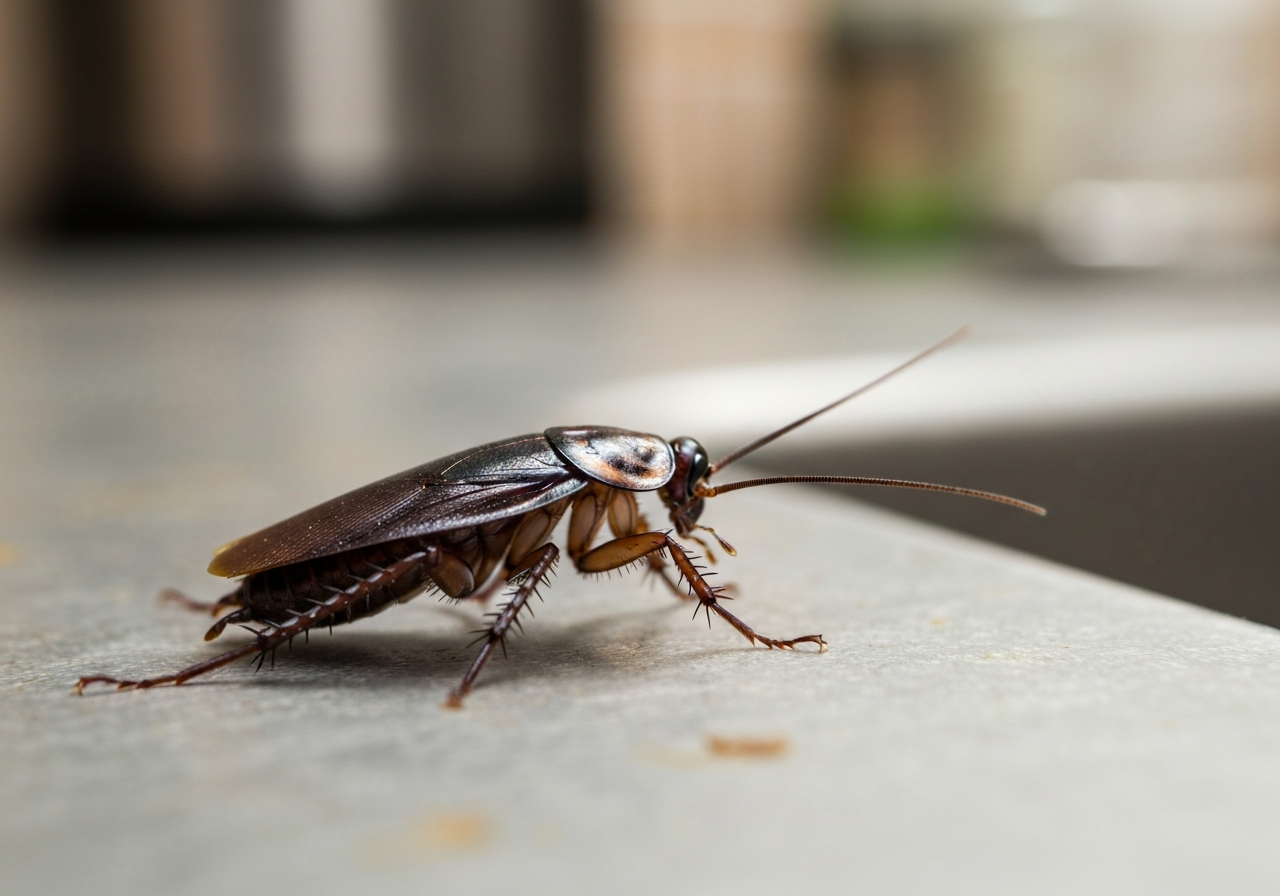
Smokybrown Cockroach
Dark, glossy mahogany, and strong fliers. Common in attics, soffits, tree canopies, and mulch beds around San Antonio homes. This is often the roach people find in the attic or spot dropping from a ceiling. They lose moisture quickly, so they move toward water sources once they are inside.
Oriental Cockroach
Dark brown to nearly black, slower moving, and drawn to damp areas. Found in drains, crawlspaces, water heater closets, and under sinks. They produce a noticeable musty odor as numbers build.
Brown-Banded Cockroach
Small like a German roach but with lighter bands across the wings. Unlike German roaches, they spread well beyond the kitchen — behind picture frames, inside electronics, in closets and upper cabinets. They are frequently carried into a home inside used furniture.
Why San Antonio Homes Get Roaches
- Weep holes. Nearly every brick home here has them, and they are an open door for tree roaches.
- Slab foundations on clay soil. Our soil expands and contracts with wet and dry cycles, opening cracks at the slab edge and around plumbing penetrations.
- Heat and drought. Roaches move indoors looking for water, which is why activity spikes in the hottest stretch of summer.
- Heavy rain. Storm drains and sewer lines flush American roaches up and out into yards and garages.
- Mulch against the foundation. Thick mulch beds pushed up against the house are ideal harborage.
- Shared walls. In apartments, duplexes, and townhomes, German roaches travel between units through plumbing chases no matter how clean your unit is.
Signs You Have a German Roach Problem
- Roaches visible during the day, which usually means the population has grown large enough that they are competing for hiding space
- Small dark specks resembling ground pepper along cabinet edges and hinges
- A musty, oily smell in the kitchen
- Egg cases — small tan ridged capsules — in cabinet corners or behind appliances
- Shed skins near warm appliance motors
- Roaches inside the dishwasher gasket, coffee maker, or microwave
How Steve Treats Roaches
- Inspection and identification. Confirming the species before anything gets treated, because the plan depends on it.
- Locating harborage. Finding where they are actually living and breeding, not just where they are being seen.
- Targeted gel baiting. Bait placed in the harborage areas, which roaches feed on and carry back to the rest of the population.
- Insect growth regulator. Breaking the breeding cycle so the next generation cannot mature and reproduce.
- Crack and crevice treatment. Treating the voids, hinges, and gaps roaches use rather than spraying open surfaces.
- Exterior perimeter work. For tree roaches and smokybrowns, addressing weep holes, mulch, and entry points around the outside.
- Follow-up. German roach work generally needs a return visit to confirm the population is actually collapsing.
Why Store-Bought Sprays Make German Roaches Worse
Bug bombs and foggers do not reach into wall voids and appliance motors where German roaches actually live. What they do is scatter the population into rooms that were not affected before, which is why people often report the problem got worse after a fogger. Many over-the-counter sprays are also repellents, meaning roaches learn to avoid treated surfaces and simply route around them. Steve works with non-repellent products and baits that roaches carry back into the harborage, which is what actually reduces the population instead of relocating it.
What Roach Treatment Costs in San Antonio
Roach pricing depends on the species, the size of the infestation, whether it is a single-family home or a shared-wall unit, how accessible the harborage areas are, and whether follow-up visits are needed. A few tree roaches coming in through weep holes is a different job than an established German roach population in a kitchen.
Keeping Roaches Out After Treatment
- Screen or seal weep holes where tree roaches are getting in
- Pull mulch back several inches from the foundation
- Fix dripping faucets and reduce moisture under sinks and around the water heater
- Store dry food in sealed containers
- Clean under and behind the refrigerator, stove, and dishwasher
- Consider switching exterior lights near doors to warmer bulbs, since bright white light draws in fliers
Roach Control FAQ
Dealing With Roaches Right Now?
If you are seeing roaches in the kitchen at night, finding them in the garage after a rain, or not sure which kind you have, Steve can identify what you are dealing with and tell you what the treatment actually involves.
Whether you need general pest control, help with rodent problems, or want to see all services, Steve is ready to help.