
Mosquito Control in San Antonio, TX
Treatment, trapping, and finding where they're actually breeding.
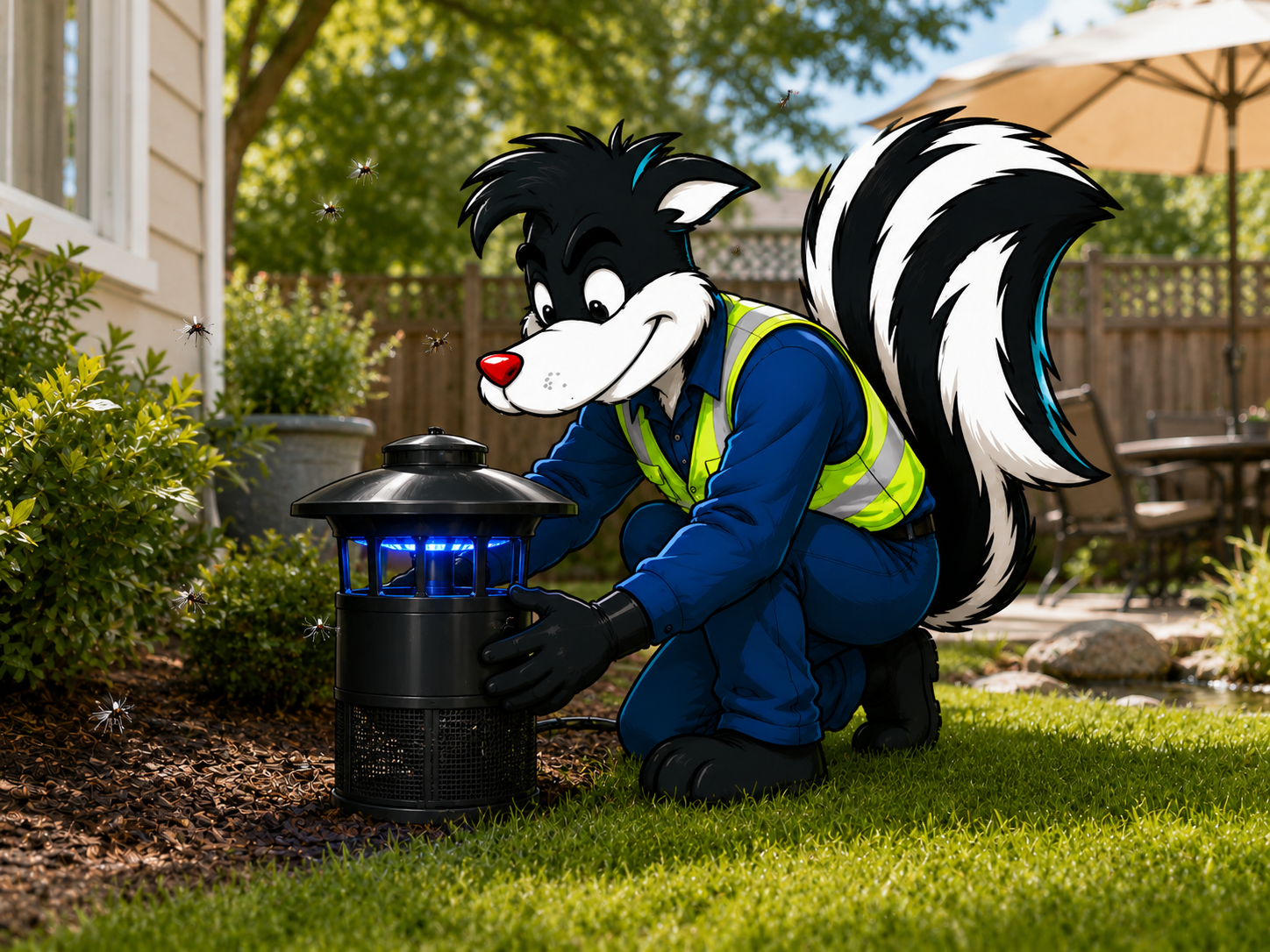
Mosquito service in this market is usually one thing: someone sprays the shrubs and comes back later to do it again. That reduces the mosquitoes resting in your foliage, which helps, but it does nothing about where they are being produced. If something on or near your property is breeding them, spraying is a treadmill. The approach that actually moves the number down combines treatment, trapping, and finding the water.
Treatment Plus Traps
Steve's approach uses both, because they do different jobs.
Treatment targets adult mosquitoes where they rest during the day — the undersides of leaves, dense shrubs, ground cover, shaded fence lines, and the cool areas under decks and along the north side of a structure. Mosquitoes do not spend the day out in the open, so treatment aimed at where they actually sit is what reduces the biting population.
Traps work continuously between visits and target mosquitoes that treatment does not reach. Where treatment knocks down what is present now, trapping keeps working on what arrives afterward — including mosquitoes coming in from a neighbor's yard or a drainage easement you have no control over.
Neither one alone does the whole job. Treatment without trapping means the population rebuilds between visits. Trapping without treatment starts too far behind on an established population.
The Part Most Companies Skip
Mosquitoes do not travel far. Many of the ones biting you were produced within a short distance of where you are standing — often in your own yard.
That means the highest-value work is finding and eliminating the water they are breeding in. It takes very little. A bottle cap of water is enough for some species, and a week is enough time.
The usual sources on a San Antonio property:
- Saucers under potted plants, which is the single most common one and the most overlooked
- Gutters holding water where they sag or clog
- Corrugated downspout extensions, which trap water in every ridge
- Tarps, covers, and grill covers with folds that hold water
- Children's toys, buckets, wheelbarrows, and empty planters
- Bird baths and pet water bowls that are not emptied regularly
- Tree holes and stumps with cavities that collect water
- Bromeliads and other plants that hold water at the leaf base
- A/C condensate drip pans and the water they discharge
- Irrigation boxes, valve covers, and water meter boxes
- French drains and low spots that stay wet after rain
- Rain barrels without proper screening
- Unused pools, spas, and fountains, which produce mosquitoes on an enormous scale
Walking the property specifically looking for water is part of the job rather than an afterthought.
Which Mosquitoes You're Dealing With
Container breeders
The mosquitoes responsible for most residential biting here breed in small artificial containers rather than ponds or creeks — the saucer under a pot, the folded tarp, the clogged gutter. They are aggressive daytime biters, they tend to stay low and go for ankles and legs, and they do not fly far, which is why the source is usually close by.
These are the ones property inspection matters most for, because their breeding sites are things you can empty.
Floodwater mosquitoes
These breed in ground that floods and dries — ditches, low areas, and drainage. Their eggs sit dormant in dry soil and hatch when water arrives, which is why San Antonio sees a surge several days after heavy rain. Numbers spike, then fall off.
Standing water breeders
These use more permanent water and are more active around dusk and dawn. Less connected to container sources and more to drainage, ponds, and neglected pools.
Mosquito Season Here
San Antonio's mild winters mean the season runs long — activity picks up early in the year and continues well into fall, with hard freezes rather than calendar dates ending it.
The pattern to expect: numbers spike several days after heavy rain, dry stretches suppress the floodwater species but not the container breeders, and the hottest part of summer shifts activity toward dawn and dusk as mosquitoes avoid midday heat.
The practical implication is that mosquito pressure here is a season-long condition rather than a single event, and that shapes what service makes sense.
What Doesn't Work
- Citronella candles and torches. Effective only in the immediate space around them and only in still air.
- Bug zappers. They kill enormous numbers of insects, most of which are not mosquitoes, and they can attract more mosquitoes to the area than they remove.
- Ultrasonic repellers and phone apps. No dependable effect.
- Dryer sheets, plants marketed as repellent, and similar home remedies. Some plants do contain compounds that repel when crushed and applied, but sitting near the plant does nothing.
- Spraying without addressing water. This is the main one. If something on the property is producing mosquitoes, treatment is fighting a supply line that never stops.
- Treating only when you notice them. By the time the biting is bad, the population has already been building.
How Steve Handles Mosquitoes
- Property inspection. Walking the yard specifically for standing water and breeding sites, including the ones people never think to check.
- Eliminating or treating the water sources found, and pointing out the ones you can handle yourself.
- Targeted treatment of resting areas — undersides of foliage, dense shrubs, shaded fence lines, under decks, and the cool side of the structure.
- Trap placement, positioned based on where mosquito activity and the property layout actually call for it.
- Conditions guidance — drainage, irrigation, landscaping, and container sources contributing to the problem.
- Ongoing service through the season, since pressure here is continuous rather than a one-time event.
- Adjusting placement and approach as conditions change through the season and after heavy rain.
What You Can Do
- Empty and scrub plant saucers, bird baths, and pet bowls weekly — scrubbing matters, since eggs stick to the sides
- Clean gutters and check that they drain rather than pool
- Replace corrugated downspout extensions with smooth pipe
- Turn over buckets, wheelbarrows, toys, and empty planters
- Pull tarps and covers tight so water runs off instead of collecting
- Fill tree holes and low spots that hold water
- Screen rain barrels and keep irrigation and meter boxes drained
- Trim dense shrubs and ground cover to reduce daytime resting areas
- Keep an unused pool or spa covered and treated rather than sitting
- Run a fan on a patio — mosquitoes are weak fliers and moving air genuinely disrupts them
Realistic Expectations
Mosquito control is reduction, not elimination.
Mosquitoes fly in from neighboring properties, drainage easements, greenbelts, and creeks, and nothing done on your property changes what happens on someone else's. Well after treatment you will still see some, and after a heavy rain you may see a noticeable increase regardless of what has been done.
What good service delivers is a yard that is usable rather than a yard with zero mosquitoes. Anyone promising the second is selling something that does not exist.
A Note on Health
Mosquitoes can transmit disease, which is the reason mosquito control is treated as more than a comfort issue. Questions about specific health risks belong with a doctor or your local health department rather than a pest control page.
What Mosquito Control Costs in San Antonio
Pricing depends on the size of the property, how much vegetation and shaded area there is to treat, how many breeding sites need addressing, whether trapping is part of the program, and whether it is a one-time treatment for an event or ongoing service through the season.
Steve gives you a number after seeing the property.
View PricingMosquito Control FAQ
Can't Use Your Own Backyard?
If your yard is unusable in the evenings, the useful question is not just what to spray but where they are coming from. Steve will walk the property, find what is producing them, and put together an approach that combines treatment and trapping rather than spraying and hoping.