
Bed Bug Treatment in San Antonio, TX
Confirming it is actually bed bugs, treating every life stage, and following up until they are gone.
Bed bugs are the pest people lose the most sleep over, both literally and otherwise. They are also the one most often misidentified — a good share of the calls Steve gets about bed bugs turn out to be something else entirely. The first job is finding out what you are actually dealing with, because bed bug treatment is involved enough that you do not want to go through it for the wrong bug.
First — Are You Sure It's Bed Bugs?
Bites alone are not enough to confirm it. Physical evidence is.
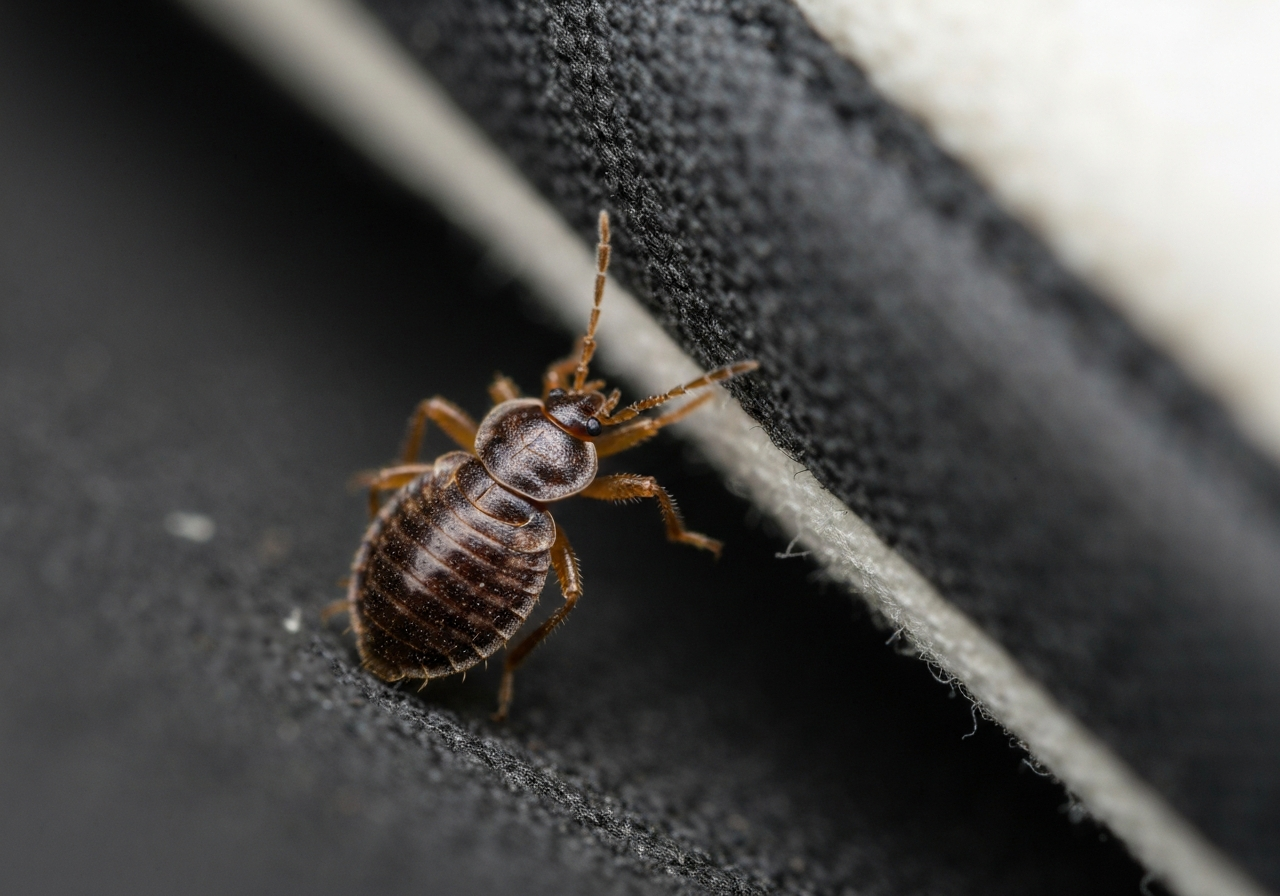
What bed bugs look like
Adults are about the size and shape of an apple seed — roughly a quarter inch, flat, oval, reddish brown. After feeding they swell and darken. Young bed bugs, called nymphs, are much smaller and nearly translucent, which makes them easy to miss. Eggs are about a millimeter, pearly white, and usually tucked into seams and crevices.
The evidence that actually confirms it
- Dark ink-dot spotting along mattress seams, box spring edges, and headboard joints
- Rusty or reddish smears on sheets and pillowcases
- Shed skins, which look like empty translucent shells, near harborage areas
- Live bugs in mattress piping, box spring corners, bed frame joints, headboards, and nightstand seams
- A sweet, musty odor when a population has grown large
What the bites do and do not tell you
Bed bug bites often show up in loose lines or clusters on skin that was exposed while sleeping, and they can take several days to appear. But reactions vary enormously between people, and a significant share of people bitten by bed bugs never develop a visible mark at all. That cuts both ways — no bites does not mean no bed bugs, and bites do not confirm bed bugs.
What gets mistaken for bed bugs
- Carpet beetle larvae, which is the single most common mix-up
- German roach nymphs, which are small and reddish brown at that stage
- Fleas, especially in homes with pets
- Chiggers, which are common around San Antonio and produce intensely itchy bites in clusters
- Spider beetles and booklice
- Skin reactions unrelated to any insect
How Bed Bugs Get Into San Antonio Homes
Bed bugs do not come up from the yard or in through a gap in the foundation. They are carried in. That is the only way they travel.
- Travel. Luggage, garment bags, and backpacks picking them up in hotels, short-term rentals, or transit. San Antonio's visitor traffic runs both directions — people bring them home from trips, and they arrive with guests.
- Used furniture. Secondhand mattresses, couches, recliners, and dressers are a leading source. Marketplace and thrift finds are worth inspecting carefully before they come inside.
- Moving. Moving trucks, moving blankets, and boxes that have been in other homes. Frequent household moves in and out of the area make this a regular source locally.
- Shared walls. In apartments, duplexes, and townhomes, bed bugs travel between units along baseboards, outlets, and plumbing runs.
- Visitors and overnight guests. Including a bag set down on a bed for an hour.
Bed Bugs Are Not a Cleanliness Problem
This is worth saying plainly because it stops a lot of people from calling. Bed bugs feed on blood, not crumbs. They show up in spotless homes and hotels with excellent housekeeping just as readily as anywhere else. Clutter can make them harder to find and treat, but it does not attract them.
Living with an active infestation is genuinely exhausting — the sleep disruption alone wears people down. There is nothing to be embarrassed about in calling, and Steve has seen it plenty of times.
What Not to Do
The instinct to act fast is understandable, but several of the most common first moves make the problem harder and more expensive to solve.
- Do not sleep in another room or on the couch. This is the mistake that costs people the most. Bed bugs locate people by carbon dioxide and body heat. Move where you sleep and they follow, which turns a bedroom problem into a bedroom-and-living-room problem. Stay in your own bed until it has been treated.
- Do not throw out the mattress yet. It is usually unnecessary, and dragging it through the house sheds bugs and eggs along the way. Encasements cost a fraction of a replacement and trap what is inside.
- Do not set off bug bombs or foggers. They do not penetrate the seams and voids where bed bugs live, and they scatter the population into walls and adjoining rooms.
- Do not spray store-bought pesticides broadly. Widespread resistance to common over-the-counter products means you are mostly moving them around, and heavy DIY application can make professional treatment harder.
- Do not put furniture in a hot car. Texas car interiors get hot, but not evenly or reliably enough to reach lethal core temperature throughout an item. It is not a dependable method.
- Do not move out temporarily. They will still be there when you return, and you may carry them to wherever you stayed.
- Do not put infested furniture on the curb unmarked. Someone will take it home.
Heat Treatment and Conventional Treatment
People often call asking specifically for heat treatment, so it is worth explaining the tradeoff honestly.
Heat treatment raises an entire room to a temperature lethal to bed bugs at every life stage, including eggs, usually in a single session. The appeal is obvious. The limitation is that it leaves nothing behind — a bed bug carried in the following week faces no obstacle. It also requires removing heat-sensitive belongings, and wall voids and dense furniture can hold cooler pockets where bugs survive.
Conventional treatment combines steam, which kills on contact including eggs, with targeted residual products placed in harborage areas. It takes more than one visit, because the goal is to catch nymphs as they hatch from eggs laid before treatment began. In exchange it leaves protection in place and costs less.
Neither is a shortcut. Thoroughness matters far more than method.
How Steve Treats Bed Bugs
- Inspection and confirmation. Finding actual physical evidence before treating anything. If it turns out not to be bed bugs, you need to know that before spending money on the wrong treatment.
- Mapping the spread. Checking beyond the primary bedroom — adjacent rooms, couches, recliners, and anywhere people regularly sleep or sit for long stretches.
- Prep guidance. A specific list of what to do before the visit, because preparation has a direct effect on how well treatment works.
- Steam treatment. Applied to mattress seams, box springs, frames, headboards, and upholstered furniture, killing bugs and eggs on contact.
- Targeted residual application. Placed into cracks, furniture voids, baseboards, and harborage points rather than sprayed across open surfaces.
- Encasements. Mattress and box spring encasements to trap anything remaining inside and make future inspection far easier.
- Follow-up visits. Scheduled at intervals timed to the hatch cycle, catching nymphs that emerge from eggs laid before the first treatment.
- Verification. Confirming there is no ongoing activity before calling it done.
How to Prepare for Bed Bug Treatment
- Strip all bedding, wash it and dry it on the highest heat the fabric allows, then bag it until treatment is finished
- Do not carry items from an affected room into an unaffected one
- Clear clutter from around beds and along baseboards so harborage areas can be reached
- Vacuum floors, mattress seams, and furniture, then take the bag or canister contents straight outside
- Pull furniture a few inches away from the walls
- Check with Steve before throwing anything away — most of it does not need to go
What Bed Bug Treatment Costs in San Antonio
Bed bug work is priced by scope rather than by a flat rate. What drives it: how many rooms show activity, how far the population has spread, the level of clutter to work around, whether encasements are included, and how many follow-up visits the situation requires. A single bedroom caught early is a very different job than an infestation that has reached multiple rooms and furniture.
Steve quotes after inspecting rather than over the phone, because a phone estimate for bed bugs is a guess.
If You Rent or Share Walls
Notify your landlord or property manager in writing as soon as you suspect bed bugs, and keep a copy of what you sent. Treating one unit in a multi-unit building often fails on its own — bed bugs move between adjoining units, and units on either side and directly above and below may need to be inspected. Steve can talk with a property manager directly about what the building needs.
Avoid carrying furniture or bedding through shared hallways, laundry rooms, or common areas.
Bed Bug FAQ
Think You Might Have Bed Bugs?
If you are finding bites you cannot explain, spotting on the sheets, or something in the mattress seam you cannot identify, Steve can confirm what it is before anyone talks about treatment. Knowing for certain is the first step either way.
Whether you need general pest control or want to view all services, Steve is ready to help.