
Bat Removal & Exclusion in San Antonio, TX
Bats are protected in Texas. Getting them out is a matter of timing and technique, not trapping.
San Antonio is bat country. The largest bat colony in the world sits just north of the city, and anyone who has watched them pour out from under a downtown bridge at dusk knows they are part of the landscape here. That is generally a good thing — until they are inside your soffit. Getting bats out of a structure is a specific job with legal constraints and a seasonal window, and doing it wrong is worse than doing nothing.
Bats Are Protected in Texas
This is the first thing to understand, because it rules out most of what people expect.
Bats are protected in Texas. They cannot be trapped and relocated, and they cannot be killed as a matter of pest control. Any company offering to trap them and take them somewhere is describing something that is not permitted.
What is permitted, and what actually works, is entry point sealing with one-way devices that let bats leave a structure on their own and prevent them from getting back in, then permanently sealing the openings once the space is empty.
That is a slower process than trapping. It is also the only correct one.
Signs You Have Bats
- High-pitched chittering and light fluttering at dusk and again just before dawn, usually inside a wall void, soffit, or attic
- Guano accumulating below an entry point, often on a wall, walkway, or the ground directly under a gap
- Dark, greasy staining around the opening, from the oils in their fur as they squeeze in and out repeatedly
- An ammonia smell where guano and urine have been building up
- Bats visibly emerging at dusk. This is the definitive check — stand outside around sunset and watch the roofline. If they are using your house, you will see them come out.
- A bat inside the living space, which most often happens when young bats are first learning to fly and end up somewhere they did not intend
Guano or Mouse Droppings?
These get confused constantly because they are similar in size, and the difference is easy to check.
Guano crumbles. Press it and it breaks apart into shiny, glittery fragments — those are the wing cases and hard parts of the insects the bats have been eating.
Mouse droppings do not crumble. They stay hard, and there is nothing shiny in them.
Where you find it matters too. Guano piles up directly beneath a single entry point or roost, because bats use the same spot repeatedly. Rodent droppings scatter along travel routes.
If it turns out to be rodents rather than bats, see rodent control — different animal, different job.
How Small a Gap They Need
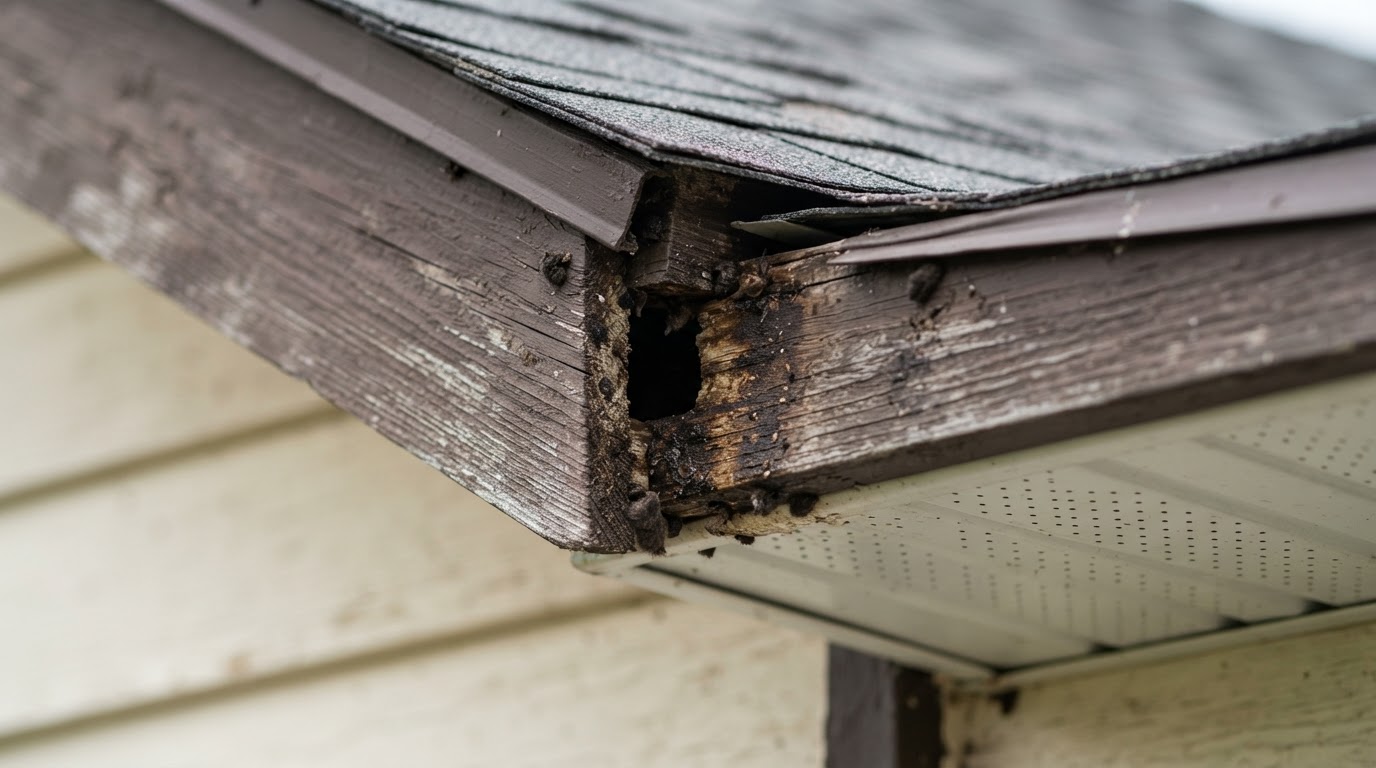
Bats only need a 3/8-inch gap along fascia, soffit seams, or rooflines to access your home.
Smaller than almost anyone expects. A bat can use an opening around three-eighths of an inch — roughly the width of a pencil — and long thin gaps count as much as round holes.
That is why a house can be sealed against rats, squirrels, and raccoons and still have bats. Sealing to a rodent standard leaves plenty of room.
Common entry points on San Antonio homes:
- Gaps where the roofline meets the wall
- Under fascia boards and behind loose trim
- Soffit seams and soffit vents
- Ridge vents and gable vents
- The edges of tile and barrel roofing
- Chimneys and flashing gaps
- Expansion joints and utility penetrations
- Anywhere two roof planes meet
Maternity Season Changes Everything
For part of the year, female bats gather to have and raise their young, and those pups cannot fly for weeks after birth.
Excluding during that window is the single worst thing that can happen on a bat job. The adults leave through the one-way devices, the flightless young stay behind and cannot follow, and they die inside the structure. You end up with the odor and cleanup of a dead animal problem in a wall cavity, plus mothers working hard to get back to young they can hear.
Because of that, exclusion has to be timed to sit outside the maternity period. That window runs through the warmer part of the year, and exactly when it opens and closes varies. Steve will tell you where you are in the cycle and whether the work can proceed now or needs to wait.
If you are being told bats can be excluded any time of year, that is a reason to ask more questions.
Why Repellents and Traps Don't Apply Here
- Trapping is not an option. Bats are protected, and relocation is not permitted.
- Ultrasonic devices do not work. There is no dependable evidence they move a roosting colony.
- There is no effective repellent for getting bats out of a structure. Mothballs, sprays, and lights do not clear a roost.
- Glue boards and sticky traps must never be used on bats. They are inhumane and not lawful for this.
- Sealing the openings without one-way devices traps the colony inside your walls. This is the most common serious mistake and it turns a bat problem into a dead animal problem.
How One-Way Exclusion Works
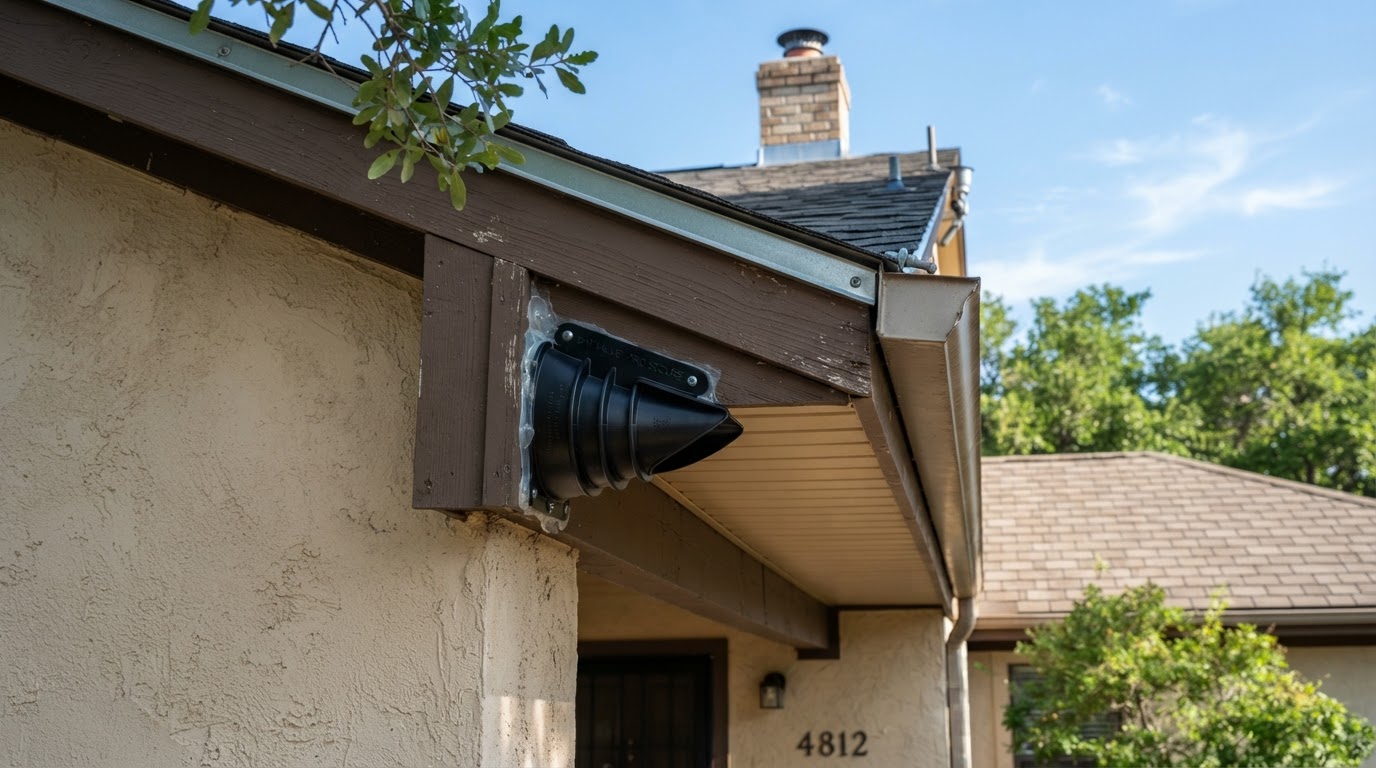
One-way exclusion devices allow bats to exit safely at dusk while preventing re-entry.
- Full inspection. Locating every gap a bat can use, including the ones too small to notice, and identifying which are actively being used.
- Confirming the season. Determining whether exclusion can proceed now or needs to wait until young are flying.
- Sealing secondary openings. Every gap except the active exits gets closed first.
- Installing one-way devices on the exits the colony is actually using. These let bats out and prevent re-entry.
- Leaving the devices in place long enough for the entire colony to have left. Bats do not all leave every night, so this is not a same-day step.
- Confirming the space is empty, then removing the devices and permanently sealing the last openings.
- Cleanup of guano and contaminated material where the accumulation warrants it.
- Follow-up. Verifying nothing has reopened and no activity has resumed.
If a Bat Gets Into the Living Space
Do not try to catch it with your hands, and do not handle it — including a bat that appears dead or is unable to fly.
Close off the room from the rest of the house if you can, open an exterior window or door, turn off the lights inside, and give it a route out. Most bats that end up in living space are trying to leave.
The part that matters most: if a bat is found in a room where someone was sleeping, or with a child, or with anyone who cannot reliably say whether they were touched, treat that as a possible exposure. Bat teeth are very small and a bite can go unnoticed. Contact a doctor or your local health department promptly rather than waiting to see whether anything develops. That is a call worth making even when it turns out to be nothing.
If the bat can be safely contained without anyone touching it, it may be needed for evaluation. Your health department will tell you.
Guano Cleanup
Accumulated guano is not just a mess. In enclosed spaces where it has built up over time, disturbing it releases spores that can cause a respiratory illness, which is the reason it is handled with proper protection rather than a shop vac and a dust mask.
Heavy accumulations also soak into insulation, hold odor that keeps drawing bats back to the same roost, and in extreme cases add real weight to a ceiling.
How much cleanup a job needs depends entirely on how long the colony has been there.
Bat Bugs Look Like Bed Bugs
This one catches people off guard. Bats carry a parasite called a bat bug, which is closely related to the bed bug and looks nearly identical to anyone who is not examining it under magnification.
When a colony is excluded, the bat bugs left behind go looking for a new host — which can mean moving down into living space. People find them, reasonably conclude they have bed bugs, and treat for the wrong thing.
If you have had bats and you are now finding what look like bed bugs, mention the bats. It changes the diagnosis.
What Bat Exclusion Costs in San Antonio
Pricing depends on the size of the colony, how many openings need sealing and how accessible they are, how much of the roofline is involved, whether the timing requires the work to be staged, and how much guano cleanup the space needs. A small number of bats using one gap is a different job than an established roost with accumulation across an attic.
Steve gives you a number after inspecting, along with what is included and what is separate.
Bat Removal FAQ
How do I know it's bats and not mice?
Check the droppings. Guano crumbles apart into shiny fragments when you press it, because it is mostly insect parts. Mouse droppings stay hard and are not shiny. Guano also piles up under one spot rather than scattering, since bats use the same entry repeatedly. The other reliable check is standing outside at dusk and watching the roofline.
Is there a bad time of year to remove bats?
Yes. During the maternity period, young bats cannot fly for weeks, and excluding then leaves them trapped inside the structure. Exclusion has to be timed around that window. Steve will tell you where you are in the cycle and whether the work can go ahead now.
Can you trap the bats and take them somewhere else?
No. Bats are protected in Texas, and trapping and relocating them is not permitted. One-way exclusion is the correct method — devices that let them leave on their own and keep them from returning, followed by permanent sealing.
What does bat exclusion cost in San Antonio?
It depends on the size of the colony, how many openings there are, how reachable they are, and how much guano cleanup is involved. Steve inspects and gives a firm number rather than quoting over the phone.
A bat got into my house — what should I do?
Do not handle it. Close the room off from the rest of the house, open an exterior door or window, turn the lights off, and let it find its way out. If it was in a room where someone was sleeping, or with a child, or with anyone who cannot say for certain whether they were touched, contact a doctor or your local health department promptly. Bat bites are small enough to go unnoticed.
Are bats dangerous?
They are not aggressive and they are not looking for people. The concerns are exposure risk from any direct contact, which is why nobody should handle one, and the respiratory risk from disturbing accumulated guano in an enclosed space. Left alone outdoors, bats are doing an enormous amount of insect control for free.
How small an opening can a bat get through?
Around three-eighths of an inch, and long narrow gaps count as much as round holes. This is why a house that has been sealed against rodents or raccoons can still have bats — the standard is much tighter.
Does the guano need to be cleaned up?
It depends on how much has built up. Accumulation in an enclosed space carries a respiratory risk when disturbed, holds odor that draws bats back to the same roost, and contaminates insulation. Light deposits may not need much. Established roosts usually do.
I keep finding bugs that look like bed bugs — could that be from the bats?
It could. Bats carry bat bugs, which look almost identical to bed bugs and get misidentified constantly. When a colony leaves, the bat bugs go looking for a new host and can move into living space. If you have had bats, say so, because it changes what should be treated.
How long does bat exclusion take?
Longer than most people expect. The one-way devices have to stay up long enough for the whole colony to clear out, since they do not all leave every night. Sealing and cleanup follow after that. Steve gives you a timeline after inspecting.
Hearing Something at Dusk?
If you are hearing chittering in a wall around sunset, finding droppings piled under one spot on the exterior, or seeing bats come out from under the roofline in the evening, Steve can confirm what is going on, tell you whether the timing allows the work now, and handle it the way it has to be handled. For other wildlife and critter removal needs, we're here to help.